Transforming grains, water, and yeast into whisky is a dream for many spirits enthusiasts. The process seems accessible, but the legal reality in France imposes a strict framework that conditions every step of the project. Making homemade whisky without breaking the law is possible, provided you clearly distinguish what falls under legal infusion and what requires administrative authorization.
Home Distillation and French Law: What You Really Risk
Distilling alcohol at home is prohibited in France without prior authorization. This point is often glossed over in online guides, yet it conditions the rest of the project.
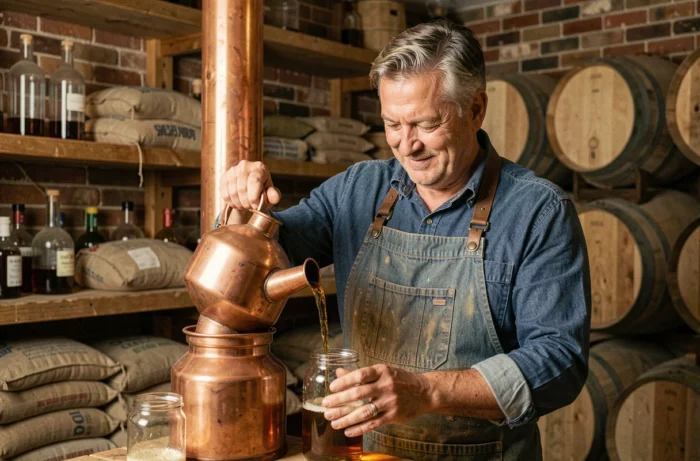
Owning a still is not illegal in itself. However, distilling alcohol without the status of an authorized warehouse operator constitutes a customs offense. Excise duties, stock records, and declarations to customs apply even for modest volumes.
The privilege of a “bouilleur de cru,” sometimes mentioned in forums, only pertains to the distillation of fruits from one’s own harvest. It does not cover the production of whisky from commercially purchased grains. In other words, even a bouilleur de cru cannot legally produce whisky at home without additional steps.
For those who want to go further, several training organizations have been offering structured distiller programs for a few years, covering technique (mastering cuts, safety) and health, customs, and tax obligations. Following such training does not grant permission to produce, but it is a concrete first step if you are considering creating a micro-distillery. You will also find tips on capitainecomment.fr to better understand the practical steps of the project.
Infusion and Home Finishing Kits: The Legal Alternative to Homemade Whisky
Would you like to customize a whisky without breaking the law? Infusion and finishing kits represent the simplest way. The principle: start with a commercially distilled spirit (neutral whisky or grain vodka) and add character through maceration or artisanal aging.
No distillation is necessary with an infusion kit, which eliminates any legal issues. You remain within the legal framework of personal transformation, comparable to making homemade liqueurs by macerating fruits.
These kits, increasingly available in European markets, generally include:
- Oak chips or staves (sometimes toasted or charred) to simulate barrel aging and provide vanilla or smoky aromas
- Spice and botanical blends (peat, vanilla, orange peel) to create a custom aromatic profile
- A glass container or a small barrel of a few liters, suitable for short-term maceration
The result will not be whisky in the regulatory sense, as the definition requires a minimum aging in a wooden barrel of less than 700 liters. You will obtain a flavored spirit with whisky notes, perfectly legal and often impressive in tasting.
Malt and Home Brewing: Understanding the Basics Before Getting Started
Even without distilling, understanding the whisky-making process allows for better ingredient selection and refining of infusions. Whisky always starts with a common step with beer: brewing a mash of grains.
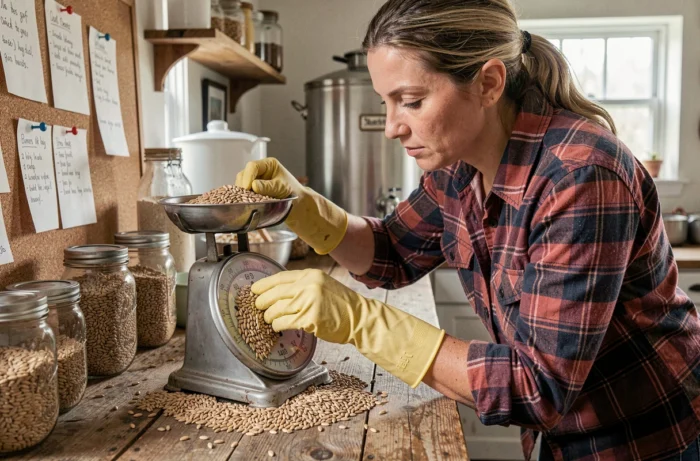
Malted barley remains the reference grain for a single malt profile. Malting involves soaking the grains in water, triggering their germination, and then drying them. This step produces enzymes (notably amylase) that convert starch into fermentable sugars.
Why this choice over another grain? Barley offers better enzymatic yield than wheat or rye, and it grows easily in varied climates. Corn, on the other hand, dominates American bourbon production, where it must represent more than half of the grain mix.
Once the malt is crushed, it is mixed with hot water to extract the sugars. This sweet wort is then fermented with yeast, exactly like for beer. The result of this fermentation is a “wash” with a few degrees of alcohol, which distilleries then pass through the still.
If you brew your own beer, you already master most of the process leading up to distillation. This is indeed the path many future micro-distillers take: they start with brewing to acquire the technical foundations.
Creating a Legal Micro-Distillery: Steps and Equipment
For those who want to produce real whisky and not just an infusion, creating a micro-distillery is the only legal path in France. The administrative process is marked out but demanding.
The main steps to anticipate:
- Create a business with a corporate purpose related to the production of spirits
- Obtain the status of an authorized warehouse operator from customs, which regulates the holding and circulation of alcohol
- Set up a facility that complies with health and safety standards, with appropriate ventilation and separate storage for raw materials
- Acquire a quality still (preferably copper) and the associated measuring equipment: alcoholometer, thermometer, hydrometer
The budget for a micro-distillery far exceeds that of a simple hobby. The still represents the main expense, followed by oak barrels for aging. Also consider the excise duties, calculated on each liter of pure alcohol produced.
The quality of the water used directly influences the aromatic profile of the whisky. Many French artisanal distilleries highlight their local source as a signature. If your project is rooted in a specific terroir, this aspect can become a strong selling point.
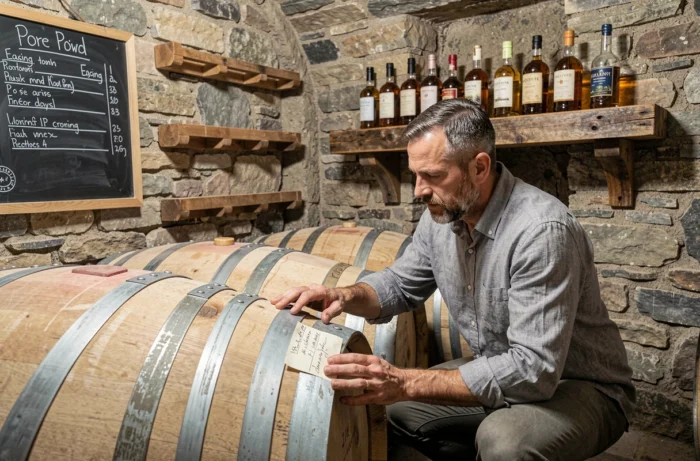
Aging remains the longest and least avoidable step. A whisky must age for a minimum of three years in a barrel to carry this designation. Smaller barrels accelerate the exchanges between the wood and the spirit, but the result differs from traditional aging in a standard barrel.
Between accessible infusion kits for everyone and the micro-distillery regulated by customs, homemade whisky encompasses very different realities. The first option satisfies curiosity and the pleasure of customizing a spirit. The second requires a significant investment, solid training, and several years of patience before tasting your first legally produced whisky.