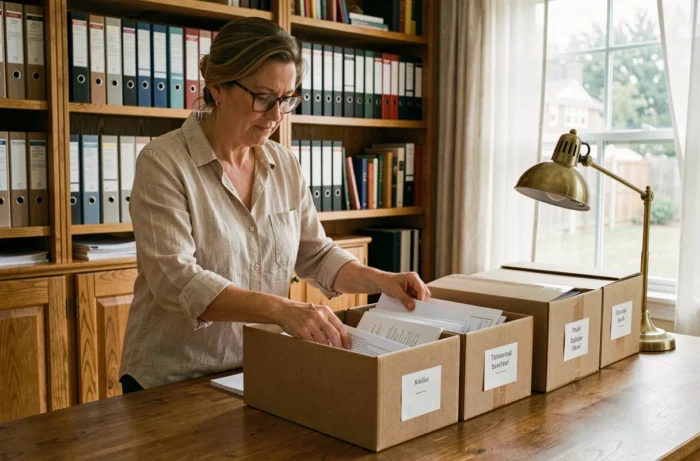
Managing domestic archives is not just about stacking binders in a closet. A poorly designed system leads to wasted time during urgent searches (disasters, tax audits, inheritance) and risks the premature destruction of documents with probative value. Here, we address the technical points that mainstream organizing guides overlook.
Home Digital Backup: The 3-2-1 Rule Applied to Personal Archives
The majority of articles on document organization ignore the technical resilience of digital copies. Recent public recommendations, particularly those from the Service-Public portal updated in August 2024, emphasize the regular backup on multiple distinct media to protect against ransomware, hardware failures, or device theft.
The so-called 3-2-1 rule forms the foundation: at least three copies of each document, on two different types of media (external hard drive and encrypted cloud, for example), with one copy kept off-site. This approach, documented in technical guides published between 2023 and 2026, includes the systematic encryption of sensitive data and periodic restoration tests.
Specifically, an individual who scans their bills, rental agreements, or insurance statements should store these files on an external hard drive at home, synchronize them to a private or encrypted cloud, and keep an additional copy with a relative or in a safe deposit box. Without a restoration test, a backup has no value: check at least once a year that your files open correctly from each medium.
To find information on Les Archivistes net, a directory of resources dedicated to domestic archiving allows for comparison of available methods and tools.
Probative Value of Digital Copies: What French Regulations Allow
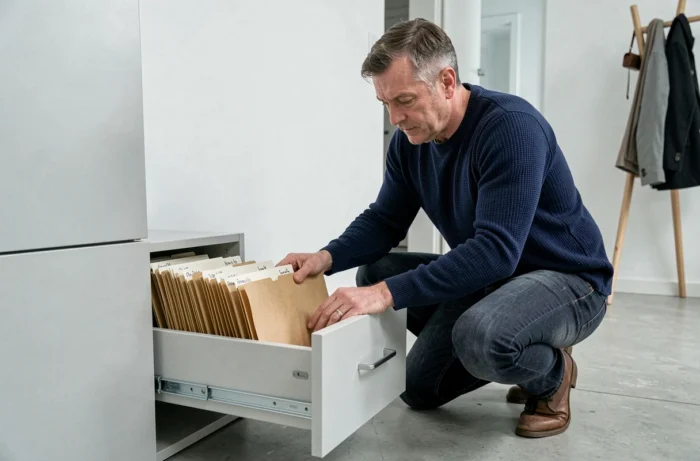
Digitizing administrative papers is not enough to give them legal value. The decree of March 22, 2017, and the provisions around article A.102 B-2 of the Tax Procedures Book precisely frame the conditions under which a reliable digital copy replaces the original paper.
Two technical requirements are non-negotiable: the integrity of the file must be guaranteed (timestamp, electronic signature, or digital fingerprint), and the copy must be made under conditions that prevent any alteration. When these conditions are met, the original paper can legally be destroyed, even for tax documents or contracts.
In practice, most individuals digitize their documents with a simple scanner or phone, without any integrity mechanism. These copies remain useful as reminders, but they will not replace the original in court or before the tax administration. For high-stakes files (real estate contracts, life insurance, notarized deeds), we recommend keeping the original paper until the legal retention period has expired.
Retention Periods for Family Documents: The Reference Table
Legal retention periods vary significantly depending on the type of document. Disposing of a work receipt or rental agreement too early exposes one to an inability to prove in case of a dispute. Here are the durations to respect for the main family documents:
| Type of Document | Retention Period |
|---|---|
| Energy, telecom, water bills | At least two years |
| Rent receipts, rental agreements | Three years after the end of the lease |
| Bank statements | Five years |
| Insurance contracts and endorsements | Two years after cancellation |
| Tax notices, tax returns | Three years (six years in case of extended audit) |
| Pay slips, employment contracts | Until retirement is settled |
| Notarized deeds, property titles | Permanent retention |
Pay slips must be kept for life as long as retirement rights are not definitively settled. This point is often underestimated.
Physical Organization of Paper Archives: Structuring Storage Space
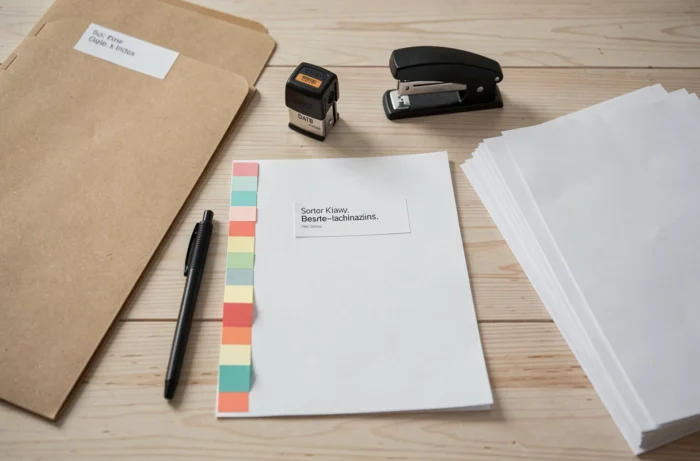
An effective organization relies on a stable hierarchy, not on multiplying categories. We recommend dividing into a maximum of six to eight main folders, each corresponding to an area of administrative life:
- Housing (lease, inventory, receipts, work, diagnostics)
- Family (civil status, family book, judgments, notarized deeds)
- Taxation (tax notices, returns, deduction proofs)
- Employment and retirement (contracts, pay slips, Pôle emploi certificates)
- Insurance and health (contracts, reimbursement statements, medical certificates)
- Bank and credit (statements, loan offers, amortization tables)
Within each folder, reverse chronological order (most recent document first) reduces search time. Clear plastic sleeves facilitate consultation without direct handling of the originals.
Dedicated Space and Storage Conditions
The storage location directly affects the durability of papers. Humidity, direct light, and temperature fluctuations degrade ink and paper within a few years. A closed cabinet in a ventilated room with stable temperature is sufficient for most households.
For documents requiring permanent retention (notarized deeds, property titles), an acid-free cardboard archive box offers better protection than standard plastic sleeves, which trap moisture over time.
Effective management of your archives and documents at home ultimately rests on three pillars: a classification plan limited to a few stable categories, adherence to legal retention periods, and a digital backup strategy that goes beyond simple digitization. Documents with probative value deserve distinct treatment, both for their physical storage and the reliability of their dematerialized copies.