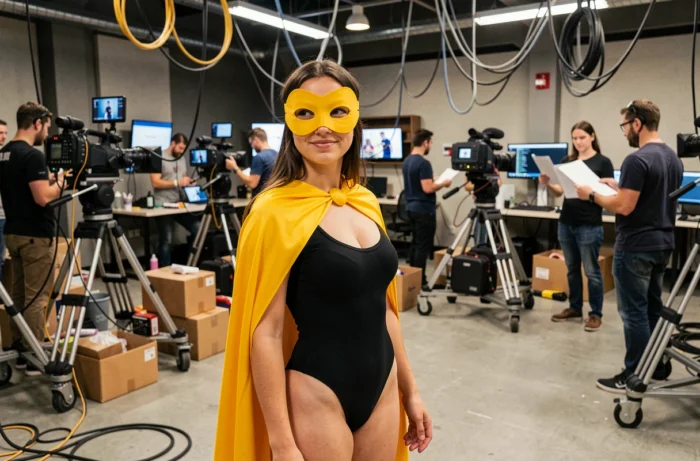
When looking to revisit the series Fantômette produced in 1992, one quickly hits a wall. No official replay, no recent DVD box set in circulation, and scattered clips on video platforms. This French television series, consisting of 21 episodes of 24 minutes each, aired on France 3, yet remains a strong marker of youth fiction from the 1990s.
Behind the nostalgia lie concrete production choices and legal blockages that explain why Fantômette remains so difficult to access.
Broadcast Rights and Restoration: Why Fantômette Remains Unavailable
Most articles dedicated to the series simply list the episodes or recall the cast. They miss the real issue: neighboring rights must be cleared separately from copyright for any digital exploitation. For a series from the 1990s, this means that it is not enough to hold the rights to the scripts adapted from Georges Chaulet.
It is also necessary to obtain permissions from the actors, the musicians of the theme song, the director, and potentially the rights holders of each technical contributor. When some of these participants do not have an identifiable representative or when the original contracts did not foresee streaming distribution, the blockage is total.
The physical restoration of the tapes poses another issue. The video masters from that era, often shot or post-produced in analog formats, require costly digitization and color correction work. Without a publisher willing to invest in this process, the series remains on the shelf. Additional information can be found by consulting the films featuring Fantômette on the Séries Animés website, which lists the various audiovisual adaptations of the character.
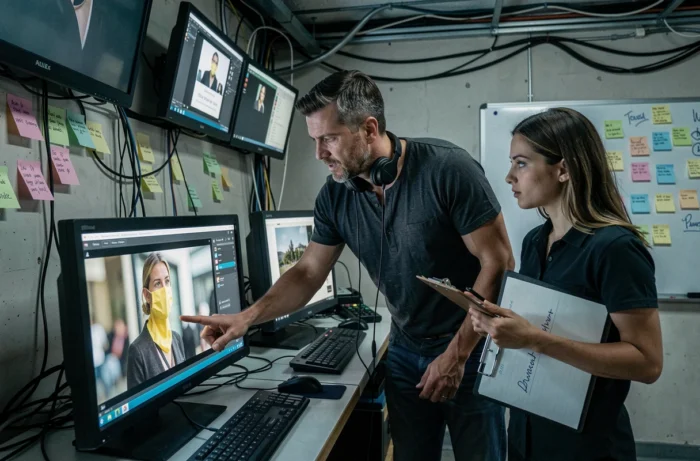
Casting and Filming of the Fantômette Series: Constraints of Youth Production
Katia Sourzac in the title role and Justine Fraioli in the main credits: the casting relied on relatively unknown young actresses at the time. This choice was not trivial. Filming with minor or very young actresses imposed a strict regulatory framework regarding working hours and the presence of a guardian on set.
The series consisted of 21 episodes, an atypical format. It is far from the standard 26 episodes of youth programs of the time, designed to fill a half-semester schedule. This odd number suggests either a tight budget or a halt in production before completing a longer season that was initially planned.
The Setting of Framboisy and Directorial Choices
The universe of Framboisy, a fictional town from Georges Chaulet’s novels published by Hachette in the Bibliothèque Rose collection, had to be transposed into real sets. The production had to find a balance between the cartoonish aspect of the books (Fantômette, Ficelle, Boulotte, Inspector Lavarin) and a credible television rendering for a young audience.
The episode titles give an insight into the desired tone:
- “Fantômette and the Clone” or “Fantômette is Frosted” borrow from the light science fiction genre, far removed from classic detective stories
- “The Curse of the Serpent Ring” and “The Secret of the Crown” lean towards mysterious adventure in the style of the original novels
- “Fantômette Against Colonel X” introduces military antagonists, an unusual theme for Hachette’s youth literature of that period
This mix of genres across only 21 episodes shows a desire to cast a wide net, perhaps too wide to retain a specific audience.
Fantômette Between Youth Fiction and Forgotten Audiovisual Heritage
A recent academic article analyzed the series not merely as a simple entertainment program, but as a representation of the bonds between girls. Françoise Dupont leads her double life as a masked avenger while sharing a house with Ficelle and Boulotte, her two friends who are unaware of her secret. This dynamic of female friendship structured around secrecy constitutes a rare narrative device in French youth fiction of the time.
The series also fits into the history of Franco-Canadian youth production. Specialized databases, such as those from Planète Jeunesse, index Fantômette alongside programs aired by Télé-Québec, indicating an international circulation of the program beyond France 3 and Canal J.
The Weight of Georges Chaulet’s Literary Work
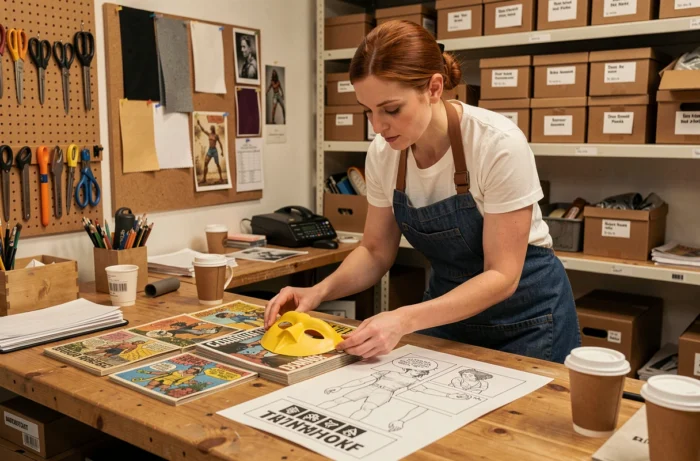
Adapting Fantômette meant touching a monument of French youth literature. Georges Chaulet wrote dozens of novels featuring the exploits of the masked avenger of Framboisy. The transition from book to screen involved negotiating with Hachette, the historical publisher of the series, for adaptation rights.
This dependence on literary rights adds a layer of complexity to any attempt at re-broadcasting. Television adaptation rights and digital distribution rights do not fall under the same contractual scope. An agreement signed in 1992 for terrestrial broadcasting on France 3 does not automatically cover streaming in 2025.
Rebroadcasting Youth Series from the 1990s: A Structural Problem
The case of Fantômette is not isolated. Many French youth series produced between the late 1980s and the mid-1990s suffer from the same syndrome: massive nostalgic returns on social media, but no accessible legal viewing options.
The reasons accumulate:
- Production contracts predating the digital era, which do not foresee new modes of distribution
- Video masters in obsolete formats, sometimes degraded by time
- A niche market deemed too small by DVD publishers and streaming platforms to justify investment in rights clearing and restoration
- The absence of a central aggregator for French heritage youth fictions, unlike well-structured catalogs of Japanese animation
This situation creates a paradox. Demand exists, fan communities share memories and screenshots on social media. Feedback varies on the quality of the copies that circulate informally. But the legal and economic framework prevents a rediscovery under proper conditions.
As long as the issue of neighboring rights and tape restoration does not find a viable economic model, Fantômette will remain a series that is widely discussed but that almost no one can watch.