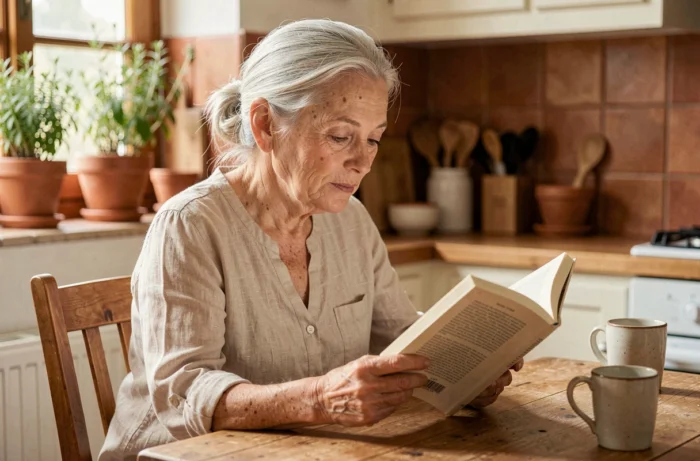
Retirement refers to the period that follows the cessation of professional activity, but it encompasses very different realities depending on age, health status, and available resources. Between a young retiree at 62 and a dependent person at 85, the needs, financial constraints, and support solutions have almost nothing in common. Living better in retirement and old age requires understanding these distinctions to make decisions appropriate for each stage.
The real cost of staying at home: what changes for retirees
Most guides on retirement life present staying at home as the natural solution, without addressing its actual cost. Access to social home assistance tends to tighten, with direct consequences on isolation and the burden on family caregivers.
A second change directly affects the budget: since the summer of 2026, seniors aged 70 to 79 lose an exemption from employer contributions when they employ a home helper for cleaning, shopping, or gardening. This benefit is now reserved for those over 80. For a 72-year-old retiree who employs a helper for a few hours a week, the bill increases significantly.
Comparing different housing and home service options becomes a necessary step. Platforms like seniorium.fr allow users to compare available options based on geographic location and level of dependency.

Cognitive health and physical activity after 60: two linked pillars
Regular physical activity protects cardiovascular health, but its role in cognition is less often detailed. Walking, swimming, or engaging in gentle activities like tai chi stimulates balance, coordination, and working memory, three functions that decline with age.
Physical activity affects memory as much as it does the body. The combination of moderate physical effort and mental stimulation (strategy games, reading, learning a language) yields better results than each of these levers taken separately.
Building a realistic routine
A common pitfall is aiming for an overly ambitious program in the first weeks, then giving up. An effective routine relies on three criteria:
- Regularity takes precedence over intensity: three sessions of thirty minutes per week provide more benefit than a single effort on Sunday
- The chosen activity must be accessible without complicated transportation, otherwise it will be abandoned at the first winter
- The social aspect is as important as the exercise itself: a group class maintains motivation and breaks isolation
Nutrition supports this effort. Prioritizing fatty fish, legumes, and fresh fruits provides the nutrients the brain needs to function properly on a daily basis.
Isolation in old age: an underestimated risk with measurable consequences
Social isolation is not just a feeling of loneliness. Among the elderly, it accelerates cognitive decline, worsens sleep disorders, and increases the risk of malnutrition. Isolation produces effects comparable to those of a chronic illness.
Several factors accumulate: the loss of a spouse, geographical distance from children, reduced mobility, and the gradual disappearance of the friendship network. The transition to retirement also removes the daily social connection that work provided.
Breaking isolation in concrete ways
Solutions exist, but they require an active approach. Waiting for contacts to renew spontaneously does not work beyond a certain age.
- Local associations offer activities tailored to seniors: memory workshops, walking groups, computer courses. They often represent the first entry point into a new network
- Volunteering provides a regular and rewarding framework, with commitments that can be adjusted according to physical condition
- Senior service residences allow for independent living while benefiting from common spaces and activities, an intermediate solution between isolated home living and a medical facility

Financial balance in retirement: anticipating health and dependency expenses
A retiree’s budget evolves in stages. In the first years, leisure and travel expenses may increase. Then, gradually, health and support expenses take up an increasing share of the budget, especially after age 75.
Out-of-pocket expenses in nursing homes for dependent elderly people (EHPAD) represent a legitimate source of concern. The monthly cost frequently exceeds pension amounts, forcing individuals to tap into savings or seek assistance like the personalized autonomy allowance (APA).
Deciding between home and specialized accommodation
The choice between staying at home and entering an adapted facility does not always come down to personal preference. When staying at home requires daily assistance for several hours, its cost can equal or even exceed that of a specialized residence. Comparing the real costs of home care and accommodation helps avoid decisions made in haste.
The France Autonomie houses, public structures, can guide families towards existing support systems. Anticipating this reflection several years before the loss of autonomy allows time to explore options without pressure.
Retirement and old age are navigated better when decisions are made early, based on concrete information rather than inherited habits. The recent removal of certain tax exemptions for those aged 70-79 reminds us that the framework changes regularly, and a relevant decision one year can become costly the next.