Finding a 1982 Porsche 911 SC in good condition is one thing. Taking it out regularly without fearing traffic restrictions, maintaining it properly, and enjoying it on the road is another. The passion for exceptional automobiles today faces very concrete constraints that did not exist ten years ago.
Low Emission Zones and Classic Cars: What Really Changes
You can no longer talk about exceptional automobiles without addressing the issue of LEZs. These low emission zones, deployed in major French urban areas, restrict vehicle circulation based on their Crit’Air sticker. For a classic car enthusiast, this is not a theoretical issue: a car from before 1997 without a Crit’Air sticker is banned from circulation in LEZs.
The classic car registration offers an exemption in certain cities, but the rules vary from one metropolitan area to another. Before purchasing a model from the 80s, one must check local conditions. Feedback on this point varies by municipality, and regulations are regularly evolving.
Enthusiasts driving with Gentlemen Drivers on pleasure routes outside urban areas circumvent the problem differently: they choose rural routes or gatherings on circuits, where restrictions do not apply.
Youngtimers: The Segment Attracting a New Generation of Enthusiasts
The classic car market is going through a stabilization phase after the significant rise of the previous decade. Average prices have declined between the peaks of 2023 and 2024, with a drop of about 9% for vehicles sold by professionals. However, not all segments are treated equally.
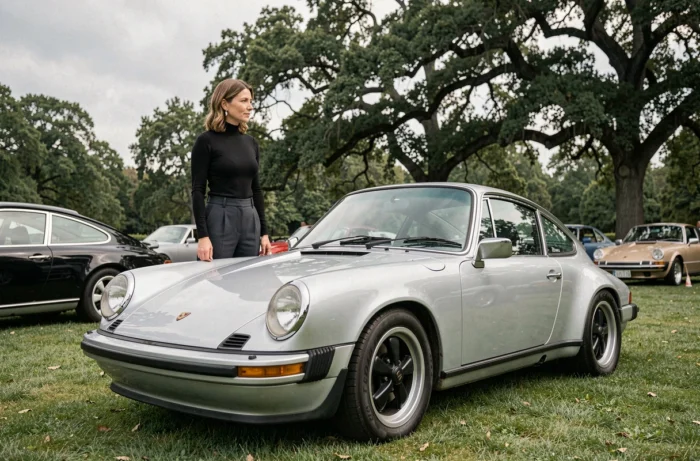
Youngtimers from the 1980-1995 era are driving the market upwards. A clientele starting from 25 years old is arriving and buying “the car of their childhood”: Peugeot 205 GTI, BMW E30, Golf GTI, Renault 5 GT Turbo. These models have a significant practical advantage over pre-war classics: parts are available, they can be driven daily, and maintenance remains affordable.
Pre-war cars or those from the 50s-60s, on the other hand, have been much harder to sell in recent years. The typical buyer profile is changing, and with it, the models that are increasing in value.
Concrete Criteria for Choosing a Youngtimer
- Availability of spare parts: a model produced in large series (Golf, 205, Civic) guarantees simpler supply than a limited Italian series
- Crit’Air compatibility: a gasoline vehicle from after 1997 receives at least a Crit’Air 3 sticker, which opens access to most current LEZs
- Documented maintenance history: stamped service book, invoices from specialists, archived technical inspections. A complete file reassures as much as low mileage
- Condition of the body: corrosion on a youngtimer often costs more to address than the mechanics themselves
Maintenance of an Exceptional Automobile: The Network Makes the Difference
Owning a beautiful car without a competent mechanic nearby is like having a decorative object. For classic or prestige models, the choice of specialist is as important as the choice of vehicle. General garages sometimes refuse to work on older engines due to lack of tools or technical documentation.
There are three types of providers in the exceptional automobile ecosystem:
- Brand-specific workshops (Porsche, Ferrari, Jaguar specialists), who master parts references and specific torque settings
- Mechanics “for all classic brands,” often former apprentices trained on various models, capable of diagnosing without electronic tools
- Automobile concierge services, which coordinate storage, maintenance, and logistics for owners of multiple vehicles
The annual maintenance cost obviously depends on the model and usage. For a regularly used youngtimer, one should plan for at least a complete service per year, a brake line check, and an inspection of hoses and flexible parts, which degrade with age even without driving.

Gatherings and Road Trips: Where to Drive Among Enthusiasts
Automobile events are the social heart of this passion. We’re not just talking about elegance contests or major auctions, but especially about organized road trips on routes selected for the pleasure of driving.
These tourist rallies, often lasting two or three days, combine mountain roads, gastronomic stops, and secure parking. The format works because it meets a simple need: to drive on beautiful roads with people who understand why we take care of a thirty-year-old engine.
Circuits also offer track days open to classic cars, with adapted sessions (no timing, free but reasonable speed). This is often the only way to truly push the engine of a classic sports car without risking a fine or encountering a speed camera.
Preparing Your Car Before an Outing
Before each event, one reviews the levels (oil, coolant, brake fluid), tire pressure, and the condition of the brake pads. A well-prepared classic car rarely breaks down; it’s the improvisation that causes breakdowns. Bringing a basic kit (fuses, belt, oil can, common tools) remains a habit that regulars never neglect.
The exceptional automobile market is transforming, driven by younger enthusiasts and more accessible models than one might imagine. Constraints exist, between LEZs and the scarcity of certain specialists, but they can be managed with foresight. The real question is not whether one can still live this passion, but how to choose the right model and surround oneself with the right people to make it last.